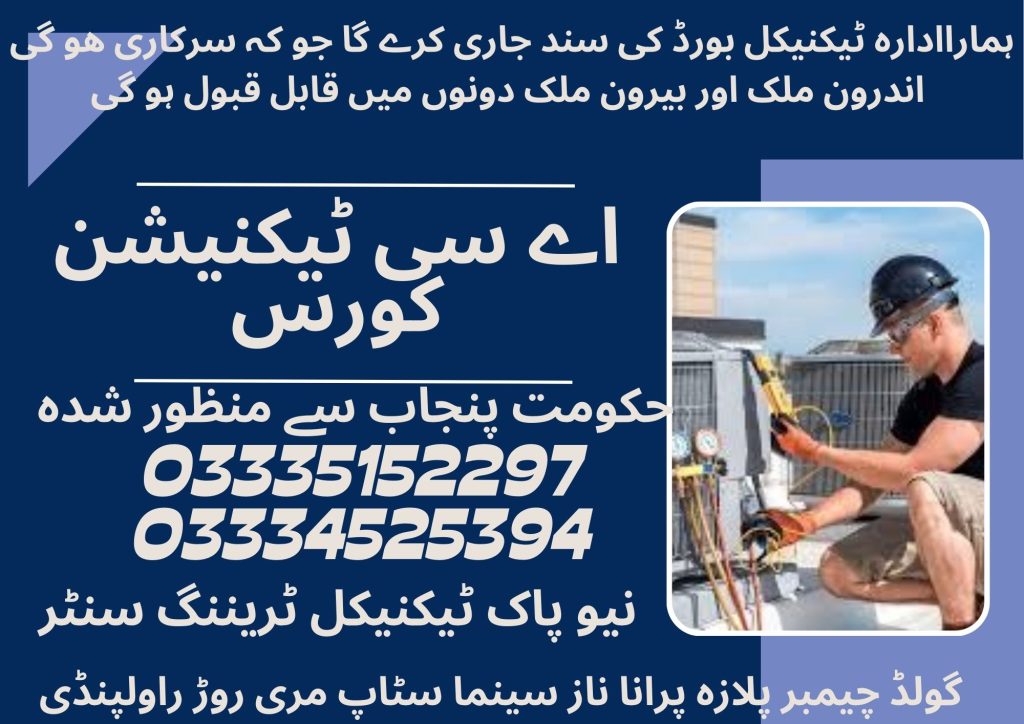

Master AC installation, gas charging, fault diagnosis, and inverter technology with our specialized course. Prepare for jobs in the local and Gulf markets, including companies like Haier and Gree. The program covers both residential and commercial systems, with practical training in gas charging, PCB repair, and maintenance, ensuring readiness for fast-growing career opportunities.
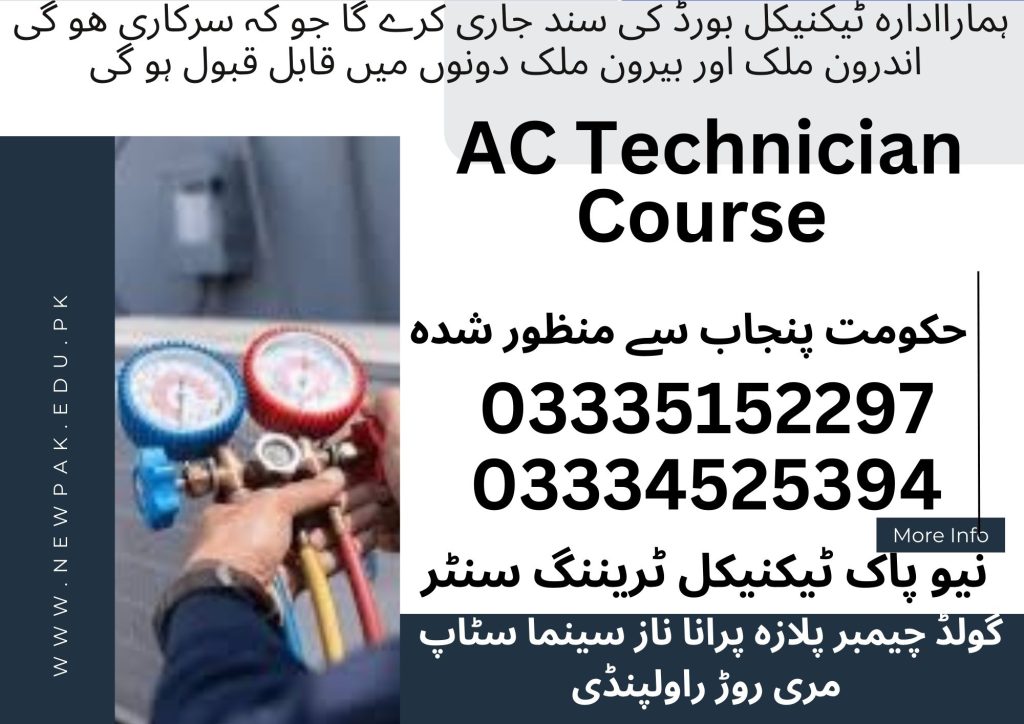
AC Technician Course in Pakistan
Course Overview
Air conditioning is no longer a luxury, it is a necessity. At New Pak Technical Training Centre, our AC Technician course is a fast-track program designed to turn you into a skilled cooling professional. We focus on the most common systems used in Pakistan and the Middle East, ensuring you can diagnose any fault and perform perfect installations from day one.
Why Choose Our AC Technician Program?
- Inverter Technology Experts: Specialized training on modern Inverter ACs, including PCB troubleshooting and DC motor diagnostics.
- Gas Charging Mastery: Learn the precise science of charging different refrigerants ($R-22, R-410A, R-32$) without wasting gas or damaging the environment.
- Rapid Fault Finding: We teach you a “Logical Troubleshooting” method to identify electrical or mechanical issues in minutes, not hours.
- Gulf Trade Test Ready: Our practical sessions are designed to mimic the Trade Tests conducted by recruitment agencies for Dubai, Qatar, and Saudi Arabia
Detailed Course Modules
06 | Months Certificate
Focus: Domestic installation and general repairs.
- AC Installation: Step-by-step training on mounting indoor/outdoor units, copper piping, and vacuuming.
- The Cooling Cycle: Practical understanding of how the Compressor, Condenser, and Evaporator work together.
- Service & Cleaning: Mastery of “Jet Pump” service and chemical cleaning of cooling coils.
- Electrical Basics: Wiring for AC plugs, stabilizers, and indoor-to-outdoor communication cables.
01 | Year Certificate
Focus: Advanced electronics, commercial units, and refrigerators.
- Inverter Troubleshooting: Deep dive into the electronic “Pulse” of Inverter ACs and how to test sensor outputs.
- Refrigerator & Deep Freezer: Comprehensive repair of domestic fridges, including capillary replacement and thermostat wiring.
- Commercial Split & Floor Standing: Installation and servicing of high-capacity (2-ton to 5-ton) cabinet units.
- PCB Repair Basics: Understanding the main control boards and how to identify burnt components.
Frequently Asked Questions (FAQs)
What is The Difference Between This and The HVAC Course?
This course is a “specialized” version focusing heavily on Air Conditioners and Refrigerators. The HVAC course is broader and includes central heating and industrial ducting. This course is perfect if you want to start a shop or work as a field technician.
Do I Get to Practice on Real ACs?
Yes. We have a dedicated lab with Split ACs, Window ACs, and Inverter units where you will perform actual gas charging and installations.
Can I work for Companies Like Haier, Dawlance, or Gree?
Many of our graduates are successfully employed as “Authorized Service Technicians” for these major brands because of our focus on modern technology.
Month 1 — Basic Refrigeration & Safety
Theory Topics
1. Introduction to Air Conditioning & Refrigeration
- Purpose of air conditioning
- Basic cooling principles
- Applications in homes and industry
2. History and Importance of AC Systems
- Evolution of cooling technology
- Role in modern buildings
- Impact on comfort and productivity
3. Types of Air Conditioning Systems
- Window AC
- Split AC
- Cassette AC
- Floor Standing AC
4. Basic Refrigeration Cycle
- Compressor
- Condenser
- Expansion Device
- Evaporator
5. Refrigerants
- R22, R134a, R410A, R32
- Environmental effects
6. Safety Rules & PPE
- Electrical safety precautions
- Handling refrigerants safely
- Proper use of gloves and goggles
7. Tools Identification
- Manifold Gauge
- Vacuum Pump
- Multimeter
- Flaring Tools
Practical Sessions
- Workshop safety practice
- Identification of AC components
- Handling tools properly
- Refrigeration cycle demonstration
- Pipe cutting, bending & flaring practice
- Basic soldering and brazing
Month 2 — Electrical Fundamentals for AC
Theory Topics
1. Basic Electricity
- Voltage, Current, Resistance
- Ohm’s Law
2. AC Electrical Components
- Capacitor
- Contactor
- Relay
- Overload Protector
3. Single Phase & Three Phase Supply
- Differences between single and three phase
- Applications in AC systems
- Phase identification methods
4. Wiring Diagrams of AC
- Reading schematic symbols
- Understanding circuit flow
- Identifying common connection points
5. Earthing & Electrical Safety
- Purpose of grounding
- Types of earthing systems
- Preventing electrical shocks
5. Load Calculation Basics
- Calculating current draw
- Power rating of AC units
- load balancing
Practical Sessions
- Use of Multimeter & Clamp Meter
- Capacitor testing & replacement
- Wiring practice of split AC
- Motor winding resistance testing
- Electrical fault finding
- Proper earthing practice
Month 3 — Split & Window AC Installation
Theory Topics
1. Detailed Split AC system study
- Main components of split AC
- Refrigerant flow in split systems
- Advantages over window AC
2. Window AC working principle
- Single unit cooling cycle
- Airflow path inside window AC
- Limitations of window AC
3. Indoor & Outdoor Unit functions
- Role of evaporator unit
- Role of condenser unit
- Communication between both units
4. Installation standards
- Proper unit positioning
- Clearance requirements
- Mounting and vibration control
5. Copper piping sizes & insulation
- Suction vs liquid line sizes
- Importance of pipe insulation
- Preventing condensation and heat loss
6. Drain system planning
- Gravity drain principles
- Avoiding water leakage
- Proper drain pipe slope
7. Vacuuming importance
- Removing moisture from system
- Removing non-condensable gases
- Preventing compressor damage
Practical Sessions
- Split AC complete installation
- Indoor & outdoor unit mounting
- Copper pipe brazing
- Gas pressure checking
- Vacuum pump operation
- Test run & performance check
- Window AC installation practice
Month 4 — AC Gas Charging & Fault Diagnosis
Theory Topics
1. Refrigerant Properties
- Physical characteristics of refrigerants
- Pressure–temperature relationship
- Refrigerant safety classifications
2. Gas Charging Methods
- By weight
- By pressure
3. Overcharging & Undercharging Effects
- Impact on cooling performance
- Effect on compressor life
- Energy consumption changes
4. Common AC Faults
- Low cooling
- No cooling
- Ice formation
5. Compressor Types & Protection
- Reciprocating compressor
- Rotary compressor
- Thermal overload protection
6. Leak Detection Methods
- Soap solution test
- Electronic leak detector
- Nitrogen pressure testing
Practical Sessions
- Gas charging practice
- Leak testing with soap & detector
- Pressure reading analysis
- Compressor testing
- Cooling efficiency testing
- Fault simulation & troubleshooting
Month 5 — Advanced AC Systems & Maintenance
Theory Topics
1. Inverter AC System
- Working principle of inverter technology
- Difference between inverter and non-inverter AC
- Benefits of variable speed compressor
2. PCB & Sensor Basics
- Role of PCB in AC operation
- Temperature sensor types
- Common PCB faults
3. Energy Efficiency & EER
- Meaning of EER and SEER
- Factors affecting AC efficiency
- Star rating system
4. Preventive Maintenance
- Regular filter cleaning
- Checking electrical connections
- Inspecting refrigerant levels
5. Annual Maintenance Contracts (AMC)
- Scope of AMC services
- Benefits for customers
- Scheduling routine visits
6. Customer Dealing & Service Ethics
- Scope of AMC services
- Benefits for customers
- Scheduling routine visits
Practical Sessions
- Inverter AC basic diagnosis
- PCB handling precautions
- AC servicing
- Filter cleaning
- Coil washing
- Fan motor servicing
- Preventive maintenance checklist
- Real customer job practice
Month 6 — Commercial AC & Professional Skills
Theory Topics
1. Commercial AC Systems
- Working of cassette AC systems
- Ductable AC airflow design
- Package unit applications
2. Regulations & Safety Quiz
- Heating, ventilation, and air conditioning overview
- Components of HVAC systems
- Difference between HVAC and split AC
3. Load Calculation (Room Size Based)
- BTU calculation formula
- Heat load from occupants and equipment
- Importance of insulation and ventilation
4. Estimation & Costing
- Material cost estimation
- Labor cost calculation
- Preparing service quotations
5. Business Setup Guidance
- Tools and equipment investment
- Legal registration basics
- Building a local customer base
6. Overseas Job Requirements
- Technical skill standards
- Certification requirements
- Work safety compliance
6. Interview Preparation
- Common technical interview questions
- Practical skill demonstration tips
- Professional communication skills
Practical Final Assessment
- Cassette AC installation overview
- Ducting basics demonstration
- Large system fault finding
- Final project work
- Practical exam & assessment