
Refrigeration and Air Conditioning Course in Pakistan
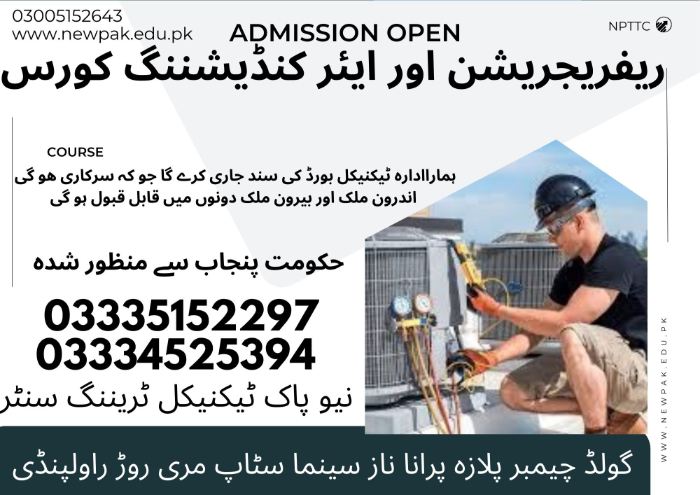
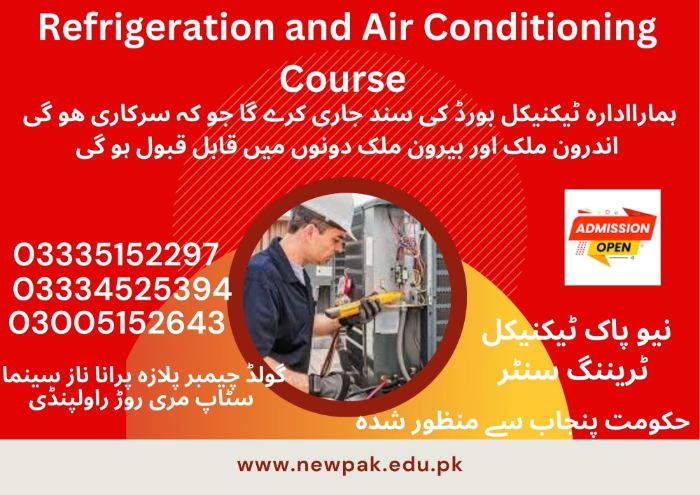
The Refrigeration and Air Conditioning Course in Pakistan at New Pak Technical Training Centre trains technicians to install, repair, and maintain domestic, commercial, and industrial cooling systems. The program emphasizes hands-on learning, modern Inverter ACs, energy-efficient solutions, and safe refrigerant handling, preparing students for successful local and international HVAC careers.
Course Overview
With rising global temperatures, the demand for cooling technology is at an all-time high. At New Pak Technical Training Centre, we offer a comprehensive Refrigeration and Air Conditioning (RAC) course that covers everything from domestic fridges to massive industrial cooling systems. We prepare you to be a technician who can handle installation, repair, and precision maintenance
Why Choose Our Refrigeration and Air Conditioning Program?
- 80% Lab-Based Learning: Spend your time working with real compressors, evaporators, and gas charging kits.
- Inverter Technology Specialist: We focus heavily on modern Inverter ACs and energy-saving systems currently dominating the market.
- Global Standards: Our training is designed for the high-demand markets of the UAE, Saudi Arabia, and Qatar, where HVAC technicians are highly paid.
- Gas Charging & Safety: Master the handling of various refrigerants (R22, R32, R410a, R600a) with strict safety protocols
Detailed Course Modules
06 | Months Certificate
Focus: Residential cooling units and home appliances.
- Fundamentals of Cooling: Understanding the vapor compression cycle and thermodynamics.
- Window & Split AC: Installation, deep servicing (master service), and component troubleshooting.
- Domestic Refrigerators: Repairing and gas charging for single-door, double-door, and deep freezers.
- Electrical Controls: Wiring of thermostats, capacitors, fan motors, and relays.
01 | Year Certificate
Focus: Large-scale commercial cooling and advanced diagnostics.
- Inverter AC Board Repair: Basic understanding of PCB electronics and inverter compressor testing.
- Central Air Conditioning: Introduction to AHUs (Air Handling Units), FCUs, and Ducting systems.
- Chiller Plants: Operation and maintenance of water-cooled and air-cooled chiller systems for plazas and factories.
- VRF/VRV Systems: Advanced training on Variable Refrigerant Flow technology used in modern buildings.
Frequently Asked Questions (FAQs)
Will I Learn How to Repair Inverter ACs?
Yes! Our course is updated to include the latest Inverter technology, which is essential for any modern technician.
Can I Start My Own Business After This Course?
Absolutely. We provide you with the technical skills to open your own AC service center or work as a certified contractor for major brands
Do You Help With Gulf Trade Tests?
Yes, we prepare our students for the specific technical interviews and practical tests required by overseas recruitment agencies.
Month 1 — Fundamentals of Refrigeration & Basic Knowledge
Theory Topics
1. Introduction to Refrigeration and Air Conditioning
- Definition, purpose, and scope of refrigeration and air conditioning.
- Historical development and modern systems.
- Importance in domestic, commercial, and industrial sectors.
- Distinction between refrigeration, heat pumping, and air conditioning.
- Future trends: energy efficiency, eco-friendly refrigerants.
2. Basic Thermodynamics Concepts
- Matter, heat, work, energy.
- Temperature scales: Celsius, Fahrenheit, Kelvin.
- Laws of Thermodynamics: Zeroth, First, and Second Law.
- Heat transfer modes: conduction, convection, radiation.
- Properties of substances relevant to refrigeration.
3. Refrigeration Principles
- Refrigeration cycle basics.
- Heat absorption and rejection.
- Concept of latent heat and sensible heat.
- Refrigeration effect, compressor work, Coefficient of Performance (COP).
- Simple vapour compression cycle overview.
4. Tools and Safety
- Workshop tools: wrenches, gauges, brazing kit, vacuum pump.
- Safety protocols: PPE, electrical safety, fire safety, chemical safety.
- Handling refrigerants safely and environmental concerns.
Practical Sessions
1. Workshop Orientation
- Identification of tools, equipment, and safety gear.
- Handling, storage, and inventory of basic tools.
2. Safety Demonstrations
- Use of PPE and correct workshop behavior.
- Fire extinguisher training.
- Safe handling of gases and pressurized systems.
3. Basic Measurements
- Using thermometers, pressure gauges, multimeters.
- Practice reading and recording data.
4. Simple Exercises
- Dismantling and reassembling basic components like wrenches/screws.
- Practice safe brazing/cutting under supervision.
Month 1 Summary: Students gain foundational knowledge and safety practices essential for all future modules.
Month 2 — Basic Mechanical Components & Fluids
Theory Topics
1. Refrigerants
- Definition and function.
- Types: natural and synthetic refrigerants.
- Properties of good refrigerants: boiling point, stability, toxicity, flammability, ODP, GWP.
- Common refrigerants in Pakistan: R22, R134a, R410a, R290 (propane), R600a (isobutane), R407c.
- Ozone depletion and Montreal & Kigali Protocols.
- Phase-out schedules and transition to eco-friendly refrigerants.
2. Refrigeration System Components
- Compressor types: reciprocating, rotary, scroll, screw, centrifugal.
- Condensers: air-cooled, water-cooled, evaporative.
- Expansion devices: capillary tube, thermostatic expansion valve (TXV), electronic expansion valve (EEV).
- Evaporators: finned, plate, coil, flooded, dry evaporators.
3. Properties of Air and Moisture
- Composition of air.
- Humidity, relative humidity, dew point.
- Psychrometric chart basics.
4. Heat Transfer and Insulation
- Conduction, convection, radiation in refrigeration.
- Insulation materials: foam, fiberglass.
Practical Sessions
1. Identification & Function
- Hands-on examination of compressors, condensers, evaporators, expansion devices.
2. Refrigerant Identification
- Detecting cylinder labels.
- Safety practices with refrigerant handling.
3. Use of Refrigeration Gauges
- Connecting gauges to simple demo units.
- Recording high/low side pressures.
4. Practice on Jointing Techniques
- Brazing and soldering practice on copper tubes.
- Leak detection methods: soap bubble, electronic detectors.
Month 2 Summary: Students build deeper understanding of system parts and begin practical skills including brazing and measuring system pressures.
Month 3 — Vapor Compression Cycle & System Design
Theory Topics
1. The Vapor Compression Cycle In-Depth
- Four basic processes: compression, condensation, expansion, evaporation.
- P-h chart and T-s diagram interpretation.
- Real vs ideal cycles.
- Subcooling and superheating.
2. System Performance Calculations
- Refrigeration effect.
- Compressor work and power requirements.
- Coefficient of Performance (COP).
- Effects of operating parameters on system efficiency.
3. Types of Air Conditioning Systems
- Window units, split ACs, packaged units, VRF systems.
- Central air conditioning basics.
- Automotive AC basics.
4. Load Calculations
- Heat gain and heat loss in buildings.
- Insulation considerations.
- Sizing of systems.
Practical Sessions
1. Demonstrating Vapor Compression Cycle
- Build demo setup illustrating cycle on test bench.
- Observe and record pressure, temperature changes.
2. Superheat and Subcooling Measurement
- Use gauges and thermometer to calculate superheat/subcooling.
- Adjust expansion devices.
3. System Charging
- Practice refrigerant charging by weight.
- Use of vacuum pump for evacuation.
- Leak testing after charging.
4. Cooling Load Estimation Practice
- Sample classroom project estimating heat gains in a room.
- Choosing appropriate AC unit.
Month 3 Summary: Students combine theory and lab work to understand detailed refrigeration cycles and learn performance measurement and system sizing.
Month 4 — Electrical Systems in RAC
Theory Topics
1. Basic Electricity Concepts
- Voltage, current, resistance, power.
- Conductors, insulators, semiconductors.
- Series and parallel circuits.
2. Electrical Components in RAC
- Motors (single-phase, three-phase).
- Starters, capacitors (start/run).
- Relays, contactors, overload protection.
- Fuses and circuit breakers.
3. Control Systems
- Thermostats, pressure controls, safety cut-outs.
- Electronic controls and sensors.
- Basic automation in refrigeration.
4. Wiring Diagrams
- Reading schematic diagrams.
- Circuit tracing and analysis.
Practical Sessions
1. Electrical Safety
- Safe handling of live circuits.
- Lockout/tagout procedures.
2. Wiring Practice
- Wiring basic circuits: motors, switches, indicators.
- Troubleshooting open/short circuits.
3. Control Panel Assembly
- Build a small control panel for demo unit.
- Install overloads, contactors, safety devices.
4. Safety Simulation
- Emergency stops
- Safety interlock testing
Month 4 Summary: Students learn essential electrical knowledge to safely work on RAC systems and interpret wiring diagrams crucial for troubleshooting.
Month 5 — Installation, Commissioning & Maintenance
Theory Topics
1. Installation Best Practices
- Site selection and preparation.
- Mounting indoor and outdoor units.
- Ductwork fundamentals (for central systems).
2. Piping and Insulation
- Copper and other piping materials.
- Insulation types and installation to prevent condensation.
3. Commissioning Procedures
- Pre-start inspection checklist.
- Evacuation and dehydration procedures.
- Correct refrigerant charging.
4. Maintenance and Servicing
- Preventive vs corrective maintenance.
- Cleaning coils, filters.
- Performance monitoring and records.
Practical Sessions
1. Mock Installation Project
- Full AC installation: measuring, piping, insulation, mounting.
- Safety and aesthetics.
2. Evacuation and Charging
- Use vacuum pump and manifold gauges.
- Determine correct charging using superheat/subcooling targets.
3. Filter and Coil Cleaning
- Demonstrate proper cleaning methods for different systems.
4. Routine Maintenance Check
- Create a maintenance schedule and checklist.
- Hands-on maintenance of demo units.
Month 5 Summary: Students gain real-world installation and maintenance experience, preparing them for field tasks.
Month 6 — Troubleshooting, Advanced Systems & Project
Theory Topics
1. Fault Diagnosis
- Common faults: cooling issues, weird noises, high energy consumption.
- Diagnosing pressures, temperatures, electrical faults.
- Use of diagnostic tools (manifold gauges, clamp meter, infrared thermometer).
2. Advanced Refrigeration Systems
- Chillers and large commercial systems.
- VRF/VRV systems.
- Heat pumps.
3. Energy Efficiency & Environment
- Energy efficient components.
- Refrigerant management and recovery.
- Environmental standards and Pakistan’s regulatory framework.
4. Quality & Customer Service
- Professionalism, reporting, customer interaction.
- Documentation and record-keeping.
Practical Final Assessment
1. Troubleshooting Lab
- Simulated faults for students to diagnose and fix.
- Electrical, mechanical, and refrigerant based problems.
2. Advanced System Demonstration
- VRF/Heat pump system overview and starter exercises.
3. Final Installation Project
- Plan, install, test and commission a complete system individually or in groups.
4. Evaluation & Report
- Students prepare detailed service reports.
- Present findings, tests, results.
Month 6 Summary: Students master troubleshooting, advanced systems, energy efficiency, and complete a full project with professional reporting.