
HVACR Course in Pakistan
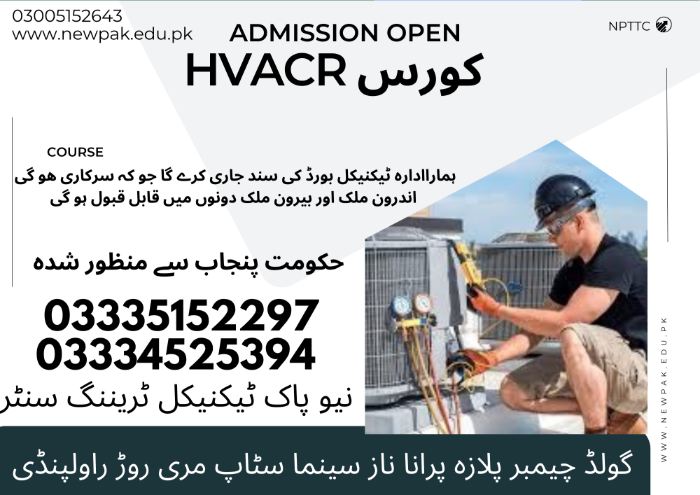
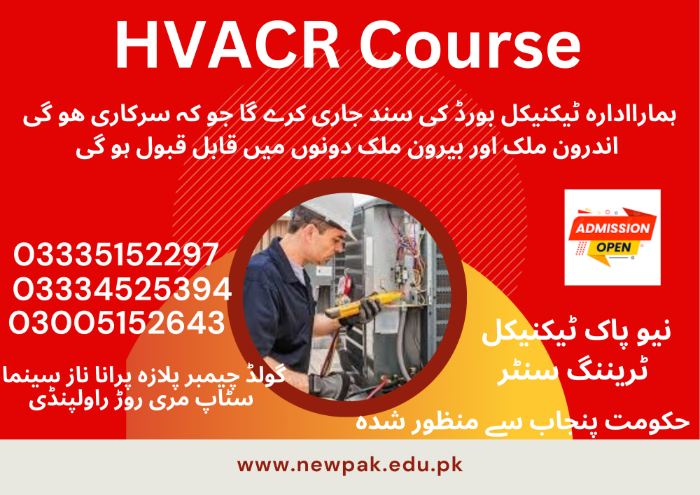
The HVACR Course in Pakistan at New Pak Technical Training Centre equips students with hands-on expertise in Heating, Ventilation, Air Conditioning, and Refrigeration systems. From domestic split and window ACs to industrial chillers and VRF/VRV systems, this course trains you in installation, maintenance, troubleshooting, and advanced diagnostics. Designed for both local and Gulf markets, it prepares students for high-demand, high-paying careers with practical skills, safety training, and industry-standard certification.
Course Overview
New Pak Technical Training Centre is a premier vocational hub located on Main Murree Road, Rawalpindi. We specialize in transforming students into industry-ready professionals through 100% hands-on practical training. Our mission is to provide the skills required for high-paying technical careers in Pakistan and the Gulf region.
Why Choose Our HVACR Program?
- Practical Excellence: 80% of our training happens in modern labs, not just classrooms.
- Gulf-Standard Training: Our curriculum meets the requirements of top companies in Dubai, Saudi Arabia, and Qatar.
- Expert Mentorship: Learn from instructors with over a decade of field experience.
- Strategic Location: Situated at Naz Cinema Stop, Murree Road, for easy access.
Detailed Course Modules
06 | Months Certificate
Focus: Residential cooling systems and rapid employment.
- Basics of HVACR: Thermodynamics, electrical safety, and tool handling.
- Split & Window AC: Installation, deep cleaning, and mechanical repairs.
- Inverter Technology: Mastering the latest energy-saving Inverter AC systems.
- Refrigeration: Repairing domestic fridges and deep freezers.
- Field Skills: Gas charging (R32, R410a), leak testing, and copper brazing.
01 | Year Certificate
Focus: Advanced training for large-scale infrastructure and supervisory roles.
- Central Cooling Plants: Operation and maintenance of massive Chiller Plants and AHUs.
- VRF/VRV Systems: Advanced training on multi-split variable refrigerant systems.
- Industrial Controls: Understanding magnetic contactors, timers, and relay logic.
- HVAC Designing: Basics of heat load calculation and industrial blueprint reading.
- Advanced Diagnostics: Using digital scanners and industrial fault-finding tools.
Frequently Asked Questions (FAQs)
Is This Course More Theoretical or Practical?
We follow a 100% practical-first approach. Majority of your time will be spent in our labs working directly on AC units, fridges, and industrial chiller components.
What Is the Difference Between the 6-Month and 1-Year Program?
The 6-month certificate focuses on domestic appliances (Split ACs, Fridges). The 1-year diploma includes everything in the 6-month program plus industrial systems like Chillers and VRF technology.
Will I Get a Job After Completing the Course?
Yes! We provide job placement assistance and guide students on how to apply for high-paying roles in Pakistan and Gulf countries.
Is the Certificate Recognized?
Yes, the certification from New Pak Technical Training Centre validates your skills and is recognized by employers worldwide.
HVACR Professional Training Curriculum
1. Introduction & Safety
- Safety rules, PPE, workplace safety protocols
- Introduction to HVACR systems and career roles
- Tools, gauges and workshop practices
- Basic communication & technical documentation skills
2. Fundamentals of Refrigeration & Air Conditioning
- Principles of refrigeration & heat transfer
- Vapor compression cycle and thermodynamic basics
- Types of refrigeration systems (domestic, commercial, industrial)
- Principles of air conditioning & HVAC system functions
- Refrigerants: types, properties, safety, environmental impact (e.g., ozone/GWP)
3. Electrical & Mechanical Basics
- Basic electrical theory & components
- Electrical wiring, circuits, switches, fuses, relays
- Motors, transformers, capacitors in HVAC systems
- Electrical safety practices
- Mechanical components (compressors, fans, pumps)
4. System Installation, Commissioning & Maintenance
- Installation of refrigeration and AC systems (split, window, central)
- Piping, brazing and soldering techniques
- Charging and handling refrigerants safely
- System startup, calibration and testing
- Routine maintenance procedures
- Troubleshooting common faults & corrective action
5. Air Distribution & Ventilation
- Duct design, air quality, airflow principles
- Filters, vents and grilles installation
- Fans and blowers selection and balancing
- Indoor air quality basics
6. Controls & Instrumentation
- Thermostats, sensors and HVAC controls
- Control circuits, relays, and automation basics
- Measurement instruments: voltmeter, ammeter, gauges
7. Advanced Topics (Optional or Longer Programs)
- System load calculation and HVAC design basics (sizing systems to space requirements)
- Hydronic systems & boilers
- Building automation systems (BAS)
- Green HVAC practices, energy efficiency
- Commercial HVAC and large system troubleshooting
8. Practical & Project Work
- Hands-on workshops with equipment
- Field visits to real HVAC installations
- Final project (system installation, fault diagnosis, report)
- Internships or on-the-job training (for longer courses)
Advanced HVACR Technical & Practical Program
1. Safety & Workshop Practice
- Workplace safety rules & OSHA/industry standards
- Use of Personal Protective Equipment (PPE)
- Safe handling of refrigerants and electrical tools
- Workshop practice, tool identification, and maintenance
2. Foundations of HVACR
- Introduction to HVACR systems (Heating, Ventilation, Air Conditioning, Refrigeration)
- Thermodynamic principles & heat transfer basics
- Refrigeration cycle (vapor compression) theory
- Refrigerants types, properties, environmental impact (ozone/GWP)
- Psychrometric chart fundamentals
3. Electrical & Electronics Fundamentals
- Electrical theory (voltage, current, resistance)
- Series/parallel circuits, fuses, switches, relays
- Motors, capacitors, transformers used in HVACR
- Electrical safety practices and wiring basics
4. Core System Components & Operation
- Compressors (reciprocating, rotary, scroll, centrifugal)
- Condensers & evaporators types and functions
- Expansion devices (capillary tube, TXV)
- Refrigeration accessories and piping layouts
5. Air Conditioning & Ventilation Systems
- Types of AC systems: window, split, ductable, packaged units
- Central AC and chilled water systems basics
- Air distribution: duct design, fans, dampers, filters
- Indoor Air Quality (IAQ) essentials
- Testing, adjusting, balancing (TAB) practices
6. Installation & Practical Techniques
- Pipe fitting, brazing and soldering copper lines
- Charging systems with refrigerants
- Vacuuming, leak detection, recovery, and recycling
- Electrical & mechanical installation procedures
- Correct usage of gauges and diagnostic tools
7. Control Systems & Instrumentation
- Thermostats, sensors and control circuits
- Basics of HVAC automation and building management systems (BAS)
- Timers, safety cut-offs, and relay logic
8. Troubleshooting & Maintenance
- Diagnose common faults in refrigeration and AC systems
- Preventive maintenance schedules
System optimization techniques - Equipment performance evaluation
9. Advanced & Optional Topics (Longer Courses)
- Month 1 – Safety & Basics
- Workshop safety, tool use
- Refrigeration fundamentals
- Month 2 – Electrical & Refrigeration Components
- Electrical circuits and motors
- Compressor, condenser, evaporator systems
- Month 3 – Air Conditioning Systems
- Split, central, packaged units
- Installation techniques
- Month 4 – Refrigeration Systems
- Domestic & commercial refrigerators
- Brazing & pipe work practice
- Month 5 – Controls & Troubleshooting
- HVAC controls
- Common fault analysis
- Month 6 – Practical Hands-On
- Field simulation
- Real equipment servicing practice