Building Management System (BMS) Course in Pakistan
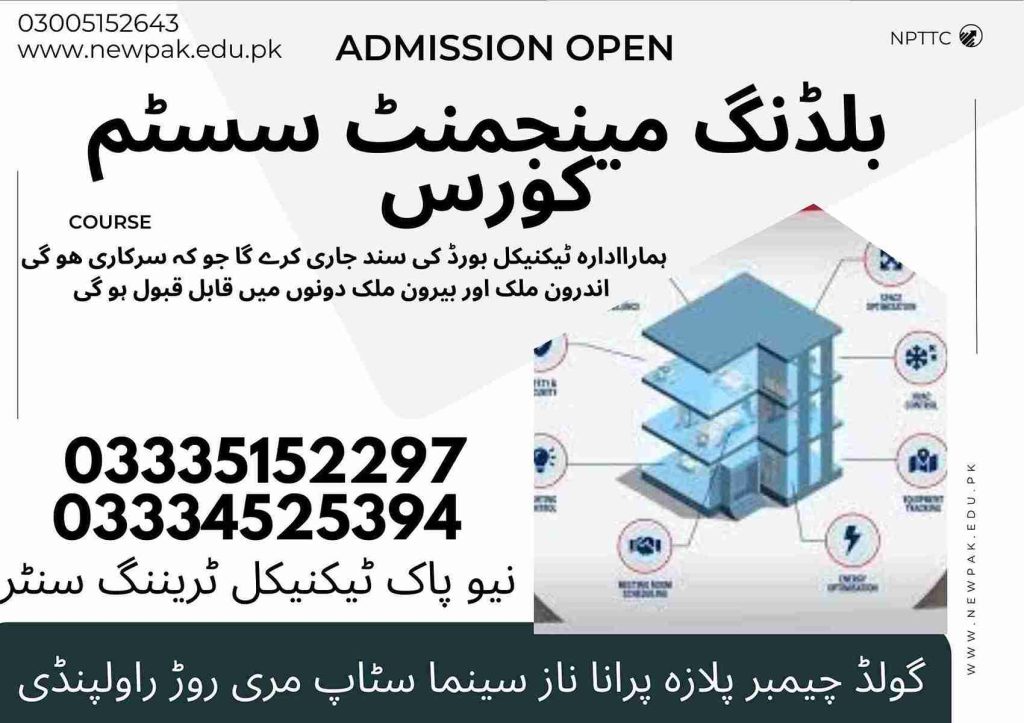
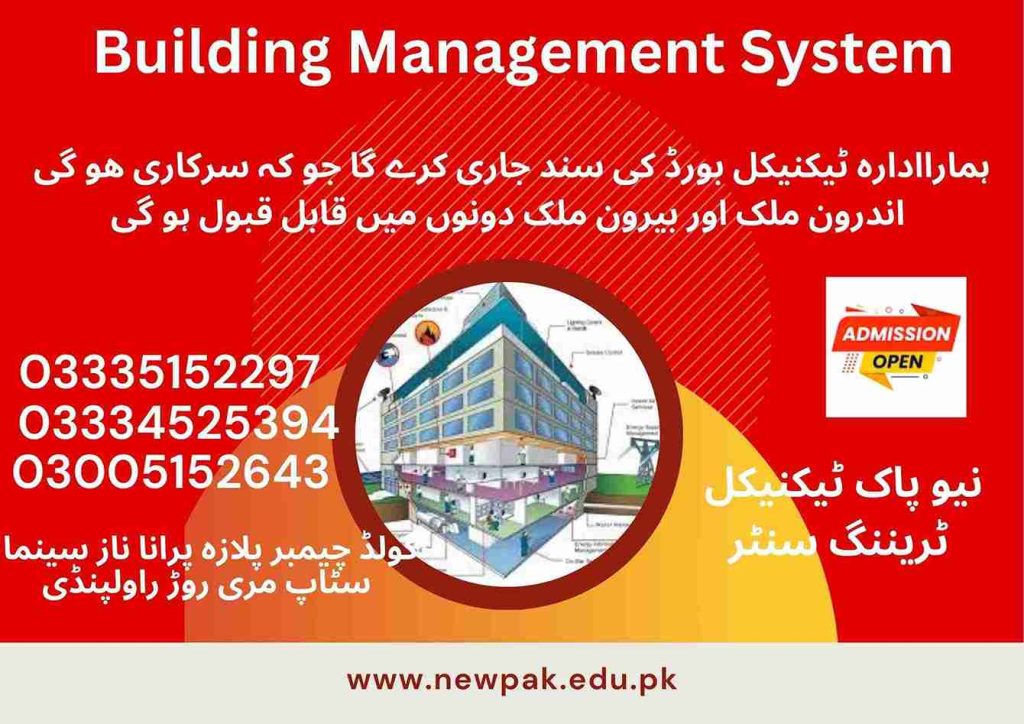
A Building Management System (BMS) is an automated control system that monitors, controls, and optimizes building services such as HVAC (heating, ventilation & air-conditioning), lighting, security, fire safety, access control, energy management, and more. It’s widely used in commercial buildings, industries, malls, hospitals, and smart buildings to enhance efficiency and safety.
Course Overview
A modern building is a living organism, and the Building Management System (BMS) is its nervous system. At New Pak Technical Training Centre, our BMS course prepares you for the high-tech world of Building Automation. We teach you how to integrate and control HVAC, lighting, power, security, and fire safety systems into a single, intelligent computer interface. As Rawalpindi and Islamabad transition toward “Smart Cities,” BMS professionals are becoming the most essential technicians in the construction industry.
Why Choose Our BMS Program?
Integration Expertise: Learn how to make different machines “talk” to each other using international protocols like BACnet, Modbus, and LonWorks.
Energy Management Focus: Master the software tools that reduce electricity consumption by up to 30%, a skill highly valued in Pakistan’s current energy crisis.
Direct Digital Control (DDC): Hands-on training with DDC controllers, sensors, and actuators—the hardware that actually executes the automation.
Gulf & 2026 Standards: Our curriculum prepares you for the massive “Neom” and “Smart Riyadh” projects in Saudi Arabia, where BMS is mandatory for every new structure.
Detailed Course Modules
06 | Months Certificate
Focus: Installation, wiring, and field device maintenance.
BMS Architecture: Understanding the three layers: Management, Control, and Field levels.
Field Devices: Installation and testing of Temperature/Humidity sensors, Pressure Transducers, and Actuators.
DDC Controller Wiring: Learning to wire inputs (AI, DI) and outputs (AO, DO) for various building subsystems.
Network Basics: Creating RJ45 cables and understanding IP-based communication between building controllers.
01 | Year Certificate
Focus: Software programming, graphics design, and system integration.
Programming & Logic: Writing custom control sequences for HVAC chillers, AHUs, and lighting schedules.
Graphics & HMI Design: Creating user-friendly 3D dashboard interfaces for building managers to monitor real-time data.
Integration of ELV Systems: Connecting CCTV, Access Control, and Fire Alarms into the central BMS platform.
Testing & Commissioning: The final stage, verifying that the entire system works as designed and meets energy-saving targets.
Fault Diagnostics & Analytics: Using trend logs and alarms to predict equipment failure before it happens.
Frequently Asked Questions (FAQs)
Is BMS the Same as Home Automation?
While similar, BMS is for commercial and industrial scales (malls, hospitals, offices). It manages massive systems like central chillers and high-voltage power plants, requiring higher technical expertise.
Do I Need to Be a Software Engineer to Join?
No. While basic computer literacy is required, we teach the specific “Block Logic” and “Scripting” used in building automation. This course is ideal for Electrical or Mechanical engineers wanting to specialize in tech.
What Is the Salary Potential for BMS in the Gulf?
In 2026, BMS technicians and engineers are in the “Specialist” category. In countries like the UAE and Saudi Arabia, salaries for certified BMS professionals are significantly higher than for standard electricians.
Comprehensive BMS Training: From Basics to Hands-On